


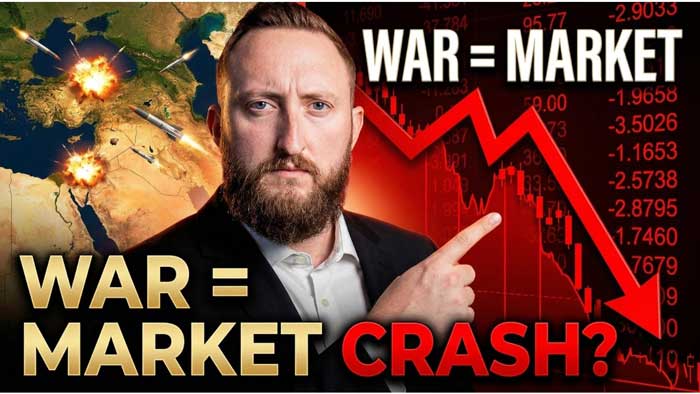
The big concern in this video is simple: iran war stock market volatility is not just a headline story. The speaker’s view is that it is already affecting the stock market, the 10-year Treasury, oil, and the choices people may need to make about retirement. His argument is that war creates volatility, volatility changes rates, and those rate moves can hit everything from mortgages to CDs to annuities.
Key Takeaways on Iran War Stock Market Volatility

- War creates volatility, and the speaker says that is already showing up in markets.
- The transcript says the stock market is falling while the 10-year Treasury is rising.
- According to the speaker, higher Treasury yields affect mortgages, CDs, money markets, and annuities.
- The video argues that rising rates can make annuities more competitive.
- The speaker frames this moment as both a risk event and a potential retirement planning opportunity.
- He also warns that investors should think seriously about safety and security in retirement.
What is iran war stock market volatility? In the context of this transcript, it means the market and rate swings the speaker connects to war with Iran, including falling stocks, rising Treasury yields, higher oil prices, and the ripple effects those moves may have on retirement planning decisions.
As the speaker puts it, the promise was no new wars, and now the country is dealing with the opposite. He says the U.S. is bombing Iran with Israel, that the conflict is only a few days in, and that six service members have already been lost. From his perspective, this is not just a foreign policy issue. It is a financial issue for Americans trying to make sense of what happens next.
So, what does that mean for you and what are the implications?
That is really the central question of the whole video. The speaker ties the conflict directly to market stress. He says the stock market is in free fall, oil is up, and the 10-year Treasury is moving higher. His point is that once the 10-year Treasury rises, it does not stay isolated in one corner of the economy. It affects pricing and competitiveness across a range of financial products people use when they are working, nearing retirement, or already retired.
Why the Speaker Says the War Matters Financially
The transcript does not present the war as a short-term news event with no downstream effect. It presents it as the kind of development that can ripple through markets very quickly. The speaker says Qatar has shut off liquid natural gas exports and that oil is already up 9% just four days into the conflict. His message is that the pressure is showing up fast, and that pressure can alter how people think about risk, income, and safety.
He also argues that geopolitical tension is tied to a larger struggle over global power. He mentions the United States, China, India, and Russia, and says there are countries that want to challenge America’s position as the world’s top power. He describes China and Russia as siding with Iran and points to India making interesting moves behind the scenes. In his telling, this is not just about one conflict. It is about what a prolonged conflict could expose or weaken over time.
The transcript goes even further on that point. The speaker says the U.S. is $38.5 trillion in debt and argues that one thing allowing the country to remain in that position is military power and weapons stockpile. He warns that if the war drags out, munitions could be depleted to the point that the U.S. may not be able to recover for 10 years. He presents that as a real long-term threat, though he also says the bombing would have to continue for some time for that to happen.
Iran War Stock Market Volatility and the 10-Year Treasury
 The clearest financial chain in the transcript is this one: war creates volatility, volatility affects the 10-year Treasury, and the 10-year Treasury affects almost everything else. The speaker repeats that point more than once. He says mortgages go up, interest rates go up, CDs go up, and annuities become more competitive.
That is the retirement angle running through the video. He is not arguing that all rising rates are good. In fact, he says higher rates are not good for many people. But he does say that when it comes to annuities, this environment is making them stronger than ever. That is one of the biggest takeaways from the transcript: the same volatility that scares investors can also improve the appeal of some conservative retirement tools.
This is also where market timing pressure can become dangerous for retirees. When the speaker talks about getting off the Wall Street roller coaster and taking some poker chips off the table, he is speaking to people who may be worried about sharp swings at the wrong time. That concern connects naturally to sequence of returns risk, especially when losses or volatility hit near retirement or during early withdrawals.
Safety, Security, and Retirement Decisions
The transcript says the stock market has already hit a crazy all-time high. That matters because the speaker is contrasting a market he sees as elevated with a geopolitical event he believes raises risk. In that setup, his message is straightforward: if someone is thinking about safety and security for retirement, this may be a moment to act rather than just hope things settle down.
He does not frame the situation as all downside. He says wars always create volatility, but they also create opportunity. In this case, the opportunity he emphasizes is not aggressive speculation. It is the possibility of using higher rates and stronger annuity pricing to protect at least part of a retirement portfolio. The phrase he uses is memorable: maybe it is time to take some of the poker chips off the Wall Street roller coaster.
That line captures the speaker’s tone well. He is not saying every dollar should leave the market. He is saying that in an environment shaped by iran war stock market volatility, some people may want to reduce exposure and focus more on protection. The idea is not to predict every next move. It is to respond prudently to the fact that war, rates, and market risk can feed into each other fast.
What the Speaker Thinks Happens Next
The transcript makes a few directional claims about what could come next. The speaker says the war is going to last at least a month and later says hopefully no longer than a month. He also says this kind of conflict always creates volatility and that the financial impact is already showing up across rates and retirement products. His outlook is clearly cautious, and his emphasis stays on preparedness rather than complacency.
He also raises questions about motives, leadership, and long-term power shifts in the Middle East and beyond. Those sections of the transcript are part of how he explains why this conflict may matter beyond the immediate bombing campaign. Even there, though, the article’s retirement takeaway stays the same: uncertainty can raise financial risk, and rising yields can change the menu of options available to people who want more stability.
For readers following the headlines and wondering whether this is just another temporary scare, the speaker’s answer is no. He treats it as a meaningful moment for anyone reviewing retirement exposure, especially if their plan depends heavily on market performance continuing without interruption.
The Bottom Line for Retirement Planning
 The bottom line from the transcript is that war, markets, and retirement are connected more closely than many people think. The speaker says the conflict with Iran is shaking markets and interest rates right now, and he believes that creates a stronger case for protection, not just participation. His position is that people should pay attention before volatility turns into damage.
If your focus is preserving hard-earned retirement savings, the message here is to review how much risk you are taking, how much market exposure you really want, and whether today’s rate environment changes your options. For those who want the full context from the speaker, Watch the full video on YouTube.
If you want to talk through how this outlook could affect your retirement strategy or how to protect some of your hard-earned retirement savings, grab some time on the schedule to talk.
