
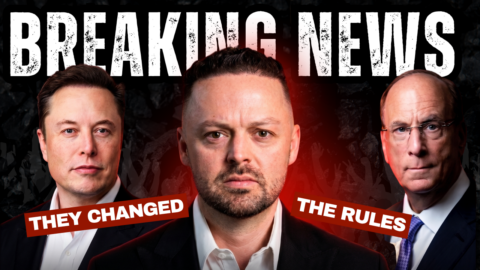

What if your retirement account is about to become the exit strategy for some of the richest investors on Earth? Not because you chose to invest. Not because your advisor recommended it. But because the rules governing your index funds were quietly changed — and your money follows the rules, not your intentions. As SpaceX, OpenAI, and the AI wave approach what could become the largest IPOs in history, a growing debate is emerging about whether ordinary retirement investors are being given access to opportunity — or simply being handed the risk after insiders have already captured most of the gains.
Key Takeaways
- Index funds do not make decisions — they follow rules. When the rules change, your money follows automatically
- Nasdaq recently approved changes allowing certain massive companies to enter major indexes faster than before — meaning retirement accounts could be forced to buy them regardless of valuation
- SpaceX is reportedly targeting a valuation approaching $1.75 trillion — the largest IPO in history
- The billionaires and venture capital firms who invested years ago eventually need buyers. The question is whether retirees are providing liquidity or gaining opportunity
- History consistently shows that great technology does not automatically create great investments — railroads, the internet, and fiber optic networks all proved this
- OpenAI and other AI companies are expected to follow SpaceX to public markets — the AI IPO wave is only beginning
- Many retirement portfolios already have enormous concentration in a handful of large technology companies — most investors do not realize it
- Panic is expensive. Preparation is profitable. The goal is understanding risks before they arrive
- A free Clarity Session shows you exactly how much technology concentration is inside your specific retirement accounts
Your 401k May Buy SpaceX — Whether You Want It To or Not
Most people would say they do not own SpaceX. And today that is technically true. SpaceX is still private. You cannot buy shares in your brokerage account. But that could soon change. And when it does millions of Americans may become SpaceX investors without ever making a conscious decision to buy it.
This is not an anti-SpaceX video. SpaceX is one of the most impressive companies ever built. Starlink is remarkable. The rocket business has transformed an industry. The technology is real. The innovation is real.
The question is not whether SpaceX is a great company. The question is whether retirement investors are being invited into the party at exactly the moment early investors are headed for the exit.
The billionaires, the venture capital firms, the private equity investors who got into these companies years ago did not invest because they wanted to hold forever.
Eventually they need liquidity. Eventually they need buyers. Eventually they need an exit. That is how investing works. Nothing unusual about that.
But who exactly will be buying from them?
Index Funds Follow Rules — Not Judgments
Most Americans do not invest by picking individual stocks. They invest through 401ks, IRAs, mutual funds, target-date funds, and index funds. Index funds have been one of the greatest wealth-building tools ever created — simple, low-cost, diversified, and responsible for helping millions of Americans retire with dignity.
But they have one characteristic most investors never think about. They do not make decisions. They follow rules. And when the rules change your money follows.
Larry Fink — CEO of BlackRock, which oversees trillions of dollars in assets — has repeatedly discussed the growing importance of private markets and expanding investor access to them. Supporters see that as a positive development. They argue ordinary investors deserve access to opportunities once reserved for institutions and the ultra-wealthy.
But critics see another side. By the time many companies finally reach public markets years of explosive growth may have already benefited private investors. The biggest gains may happen before retirement investors ever get a seat at the table.
Wall Street calls it democratizing access. Critics call it democratizing the risk.
The Nasdaq Rule Change Nobody Is Talking About
Recently Nasdaq approved changes that allow certain massive companies to enter major indexes much faster than before. Supporters say it is simply modernization.
Critics argue something else entirely. They argue the changes create a perfect setup: early investors get liquidity, retirement investors inherit the valuation risk.
Why? Because once a stock enters a major index funds tracking that index are required to buy it. Not because it is cheap. Not because it is attractive. Not because it is a bargain. Because the rules require it. Billions of dollars can flow automatically — with no vote, no valuation committee, no discussion. Just automatic buying.
And when billions of dollars are forced to buy something regardless of price it is worth paying attention.
The SpaceX Valuation Question
Reports suggest SpaceX could pursue a valuation approaching $1.75 trillion. That would make it one of the largest companies on Earth almost overnight — and the largest IPO in history.
Maybe it is worth that. Maybe it is not. Reasonable people can disagree.
But here is something hard to argue with: when expectations reach extreme levels the margin for error gets very small. And history has a habit of teaching this lesson over and over again.
Railroads changed America. Investors who bought at the wrong price got crushed. The internet changed the world but many investors still lost fortunes. Fiber optic networks became the backbone of modern life but many of the companies behind them went bankrupt.
The technology won. The early investors often did not.
Retirees do not get paid for being right about technology. They get paid for owning a profitable company at a reasonable price. A company can be revolutionary and still be overpriced. A company can change civilization and still disappoint investors. History is filled with examples.
The AI IPO Wave Is Only Beginning
SpaceX may only be the beginning. OpenAI, Anthropic, and other AI companies are expected to follow. Together they represent the most powerful investment narrative on the planet right now.
Every CEO is talking about artificial intelligence. Every earnings call mentions it. Every investor wants exposure to it. And whenever everyone wants the same thing at the same time — that is usually when smart investors slow down and start asking questions.
Will AI change the world? Probably. Will SpaceX continue doing extraordinary things? Probably. Will these companies create tremendous value? Possibly.
But that is not the question retirees should be asking. The real question is this: who benefits most from these valuations — the investors buying today or the investors selling? Because those are not the same thing.
Are Retirees the Buyers of Last Resort?
The concern some analysts raise is not that these companies are bad. Not that the technology is not real. But that retirement savers may end up as the buyers of last resort — purchasing these companies after years of growth have already made the early investors very wealthy.
The risk may be going public just as the reward is going private.
And that connects directly to something The Retirement Reset documented: the financial system changes quietly. The rules change quietly. And most people do not find out until it is too late to do anything about it.
Under UCC Article 8 your retirement savings are already pooled through the Depository Trust Company in a legal structure that may not protect you the way you think. Add to that a growing concentration in overvalued technology companies entering your index funds automatically — and the risk picture changes significantly for anyone within five to ten years of retirement.
For a deeper look at the legal vulnerability in your accounts read The Great Taking Explained.
What Retirees Should Do Right Now
Panic is expensive. Preparation is profitable. The goal is not predicting the future — it is understanding the risks before they arrive.
Know what you actually own. Open your 401k and look inside. What percentage of your holdings is concentrated in large technology companies? Most people have never checked. Most advisors have never shown them.
Understand concentration risk. Many retirement portfolios already have enormous exposure to a handful of large technology companies — far more than most investors realize. The larger these companies become the larger their influence on your retirement outcome.
Ask one powerful question. If this company were not famous — if it were not associated with AI or Elon Musk — would you still be excited about buying it at this valuation? That is a surprisingly effective filter.
Build a retirement plan that can survive uncertainty. Retirement success is not built on chasing the next big thing. It is built on managing risk, protecting capital, generating income, and building a plan that can survive whatever the market does in year one.
SpaceX may become one of the greatest companies ever built. OpenAI may transform civilization. AI may create extraordinary wealth. All of that can be true — and retirement investors can still overpay. Because investing is not just about finding great companies. It is about finding great companies at reasonable prices. And sometimes the biggest opportunities for insiders become the biggest risks for everyone arriving late.
What to Do Next
If you want to understand specifically how much technology concentration is inside your retirement — and what a protected plan looks like for your situation — a free 15-minute Retirement Plan Clarity Session with Andrew Winnett, CFF is the right next step.
Your retirement. Your decision. No obligation.
Book your free Clarity Session → retirementrenegade.com/retirement-plan-clarity-session
Stream The Retirement Reset free — promo code CLARITY → retirementrenegade.com/the-retirement-reset
FAQs
Potentially yes — not directly, but through index funds. Once SpaceX goes public and enters major indexes, every fund tracking those indexes must buy it automatically regardless of price or valuation. If your 401k holds index funds or target-date funds that track those indexes, your money follows.
Index funds are investment vehicles designed to mirror a specific market index — like the S&P 500 — by holding the same stocks in the same proportions. They do not make judgment calls about valuation. When a company enters the index the fund must buy it. When a company leaves the fund must sell it. Automatically. No vote required.
Nasdaq recently approved changes allowing certain massive private companies to enter major indexes faster than before — reducing the time and criteria required before inclusion. This means companies like SpaceX could flow into indexes your 401k tracks sooner and at potentially higher valuations than under the previous rules.
Reports suggest SpaceX could target a valuation approaching $1.75 trillion — which would make it one of the largest companies on Earth almost overnight and potentially the largest IPO in history.
Larry Fink is the CEO of BlackRock — the world's largest asset manager overseeing trillions of dollars. He has repeatedly discussed expanding ordinary investor access to private markets, arguing it democratizes opportunity. Critics argue it primarily benefits early investors who need buyers for their positions.
Democratizing access is the argument that opening private companies to ordinary investors gives everyone the same opportunity as institutions and the ultra-wealthy. Democratizing risk is the counter-argument — that by the time ordinary investors can access these companies the explosive early growth has already happened and they are primarily absorbing the downside risk that comes with peak valuations.
That is the concern some analysts raise. The billionaires and venture capital firms who invested in SpaceX and similar companies years ago eventually need liquidity — they need buyers. If index rule changes cause retirement accounts to automatically purchase these companies at peak valuations retirees may be providing the exit for early investors rather than accessing genuine opportunity.
Concentration risk is when too much of a portfolio is exposed to a small number of companies, sectors, or assets. Many retirement portfolios already have enormous exposure to a handful of large technology companies through index funds — far more than most investors realize. If additional trillion-dollar companies enter those same indexes that concentration increases further.
Railroads transformed America and created enormous value — but investors who bought at peak valuations lost fortunes. The internet changed the world — but many investors in the dot-com era were wiped out even though the technology itself succeeded. Fiber optic networks became the backbone of modern communication — and many of the companies that built them went bankrupt. The technology won. The investors who arrived late often did not.
Not worried — informed. Panic is expensive. Preparation is profitable. The question is not whether AI will change the world — it probably will. The question is whether your retirement portfolio is carrying more concentration risk in technology companies than you realize, and whether your income floor is protected regardless of what those companies do in the first year of your retirement.
More than most people realize. A standard S&P 500 index fund already has a significant percentage of its holdings concentrated in a handful of large technology companies. As these companies grow and new ones are added that concentration increases. Most investors assume they are diversified because they own an index fund — without realizing how concentrated that index has become.
UCC Article 8 is the legal framework governing your retirement accounts that gives banks and custodians legal priority over your savings if they fail. It means your retirement savings are already pooled in a legal structure that may not protect you the way you think. Add growing concentration in overvalued technology companies and you have two compounding risks — legal vulnerability in the custody structure and valuation risk in the underlying holdings.
First know what you actually own — open your 401k and understand what index funds hold and how concentrated they already are in technology. Second understand your income floor — if your essential retirement expenses depend on portfolio withdrawals a significant market decline in year one of retirement changes everything permanently. Third ask yourself whether your current plan has been stress-tested against a 30 to 45 percent decline in the first year of retirement.
A free 15-minute conversation with a Certified Financial Fiduciary. Your retirement. Your situation. What is protected and what is not. No obligation. Book a free Clarity Session at retirementrenegade.com/retirement-plan-clarity-session to understand the specific carve-outs available for your situation.
retirementrenegade.com/reset and use promo code CLARITY at checkout for free instant access. Watch on any device anytime.
