


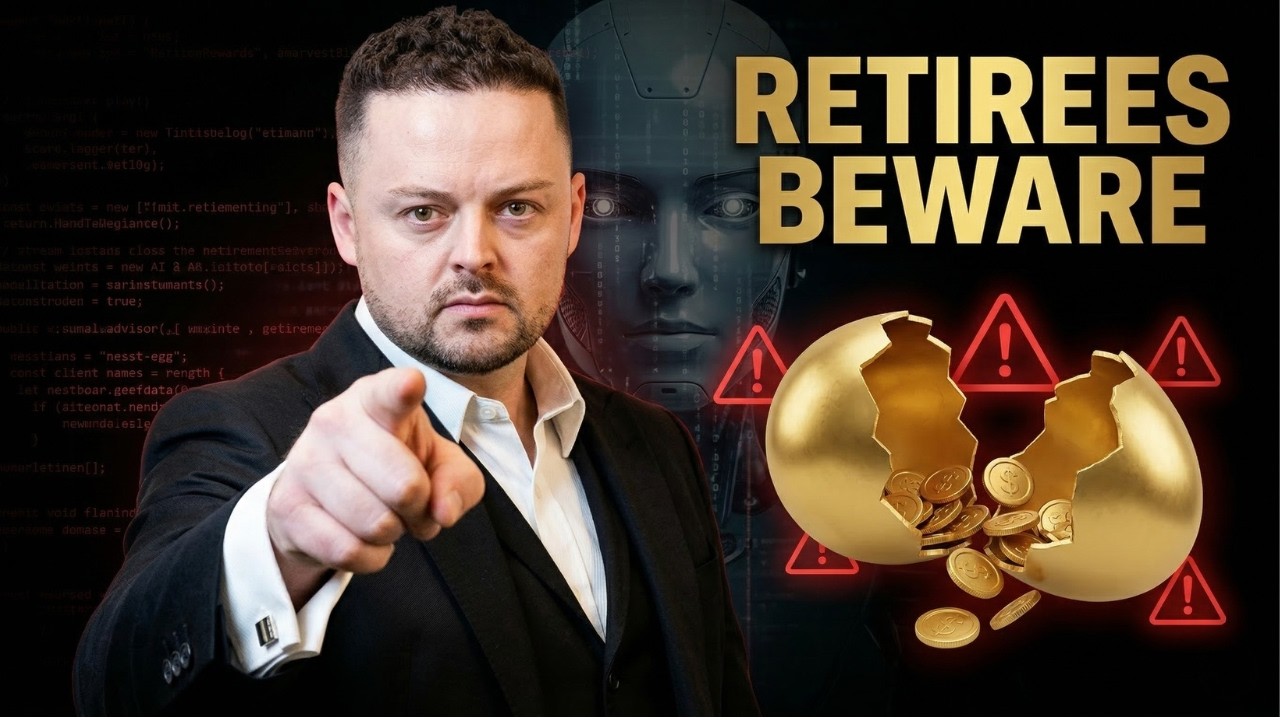
AI retirement scams are already affecting people in real dollars. Not in theory. Not something off in the future. And most retirees won’t see the risk until it’s too late. That’s what makes this shift different. It doesn’t look like what people expect. It doesn’t feel like what people were trained to watch for. And that’s exactly why it’s working.
Key Takeaways on AI Retirement Scams
- AI retirement scams are already costing retirees money through highly realistic deception.
- Retirees are strategic targets because they control a large portion of accessible wealth.
- Modern scams look polished and credible with no obvious red flags like poor grammar.
- Urgency is a primary driver behind most successful financial deception.
- Feeling cautious is not the same as being protected structurally.
- Digital exposure is now a core retirement risk alongside traditional risks.
What is AI retirement scams? AI retirement scams refer to modern forms of financial deception that use advanced technology to appear real, credible, and trustworthy, specifically targeting retirees and turning digital interactions into real financial loss.
The Hidden Danger of AI Retirement Scams
 Let me give you a real example. A retiree believed he was messaging a well-known country singer. He followed him online, saw posts, interacted over time. Eventually, the conversation turned personal. Then financial. He sent money. He believed it was real.
It wasn’t real.
And here’s the part that matters. He wasn’t foolish. He was emotionally manipulated. That distinction matters more now than it ever has.
This is where AI retirement scams are different. They don’t rely on obvious mistakes. They rely on trust, familiarity, and timing.
Why Retirees Are Strategic Targets
Retirees are not random targets. They are highly strategic targets.
Americans over 60 control the majority of household wealth. That means liquidity. That means access. That means opportunity—for the wrong people.
Another example. A man believed he found an early crypto opportunity. The website looked flawless. Professional dashboard. Live performance tracking. Everything looked legitimate.
He started small. Watched it grow. Then invested more. Eventually, he pulled from retirement funds.
And then one day, the site disappeared. So did his money.
The deception didn’t look suspicious. It looked perfect.
How AI Retirement Scams Are Changing What “Risk” Means
 For decades, retirement risk meant three things. Market volatility. Taxes. Outliving your money.
If you want to understand how traditional risks like volatility still play a role, you can explore retirement market volatility risks and how they impact long-term planning.
But now there’s a fourth category emerging quietly.
Digital exposure.
And digital exposure doesn’t stay digital. It becomes financial.
That’s the shift most people haven’t fully processed yet. The risk isn’t just in your portfolio anymore. It’s in your behavior. Your access points. Your patterns.
If you’re looking for structured ways to think about retirement decisions overall, tools like retirement planning tools and resources can help frame broader financial awareness.
Three Shifts Every Retiree Must Understand
1. Legitimacy Now Looks Polished
Bad grammar is gone. Typos are gone. Websites look real. Voices sound familiar.
The old warning signs people relied on? They’re disappearing.
2. Urgency Overrides Intelligence
Most scams don’t succeed because someone is uninformed.
They succeed because someone is rushed.
When a decision feels urgent, people act. Even careful people.
3. Feeling Careful Is Not Structural Protection
Most retirees say, “I’m cautious.”
Very few have actually measured their exposure.
And what doesn’t get measured can’t be strengthened.
Why AI Retirement Scams Hit Harder in Retirement
Retirement is different than your working years.
When you’re 40 and lose money, you have time. When you’re retired, disruption hits harder. Recovery is slower. Stress is heavier. Independence feels more fragile.
That’s why this conversation matters.
Not because AI is scary. But because retirement deserves structural protection.
So What Should You Be Asking Right Now?
If digital deception continues to evolve, how resilient is your retirement structure?
Not just your portfolio.
Your structure. Your exposure. Your behavioral patterns. Your access points.
Most households are strong in several areas—and quietly exposed in one or two.
That’s not a judgment. That’s an environment shift.
Next Steps to Strengthen Your Awareness
 Awareness is step one.
If you watched this and thought, “I didn’t realize it had evolved that much,” that’s where this starts.
From there, it becomes about understanding how modern deception actually works and how to measure your exposure before something happens.
This isn’t about technology. It’s about protection.
Watch the full video on YouTube to continue the conversation and go deeper into how these situations unfold.
If you’re ready to take the next step, consider getting in touch to start strengthening your retirement structure today.
